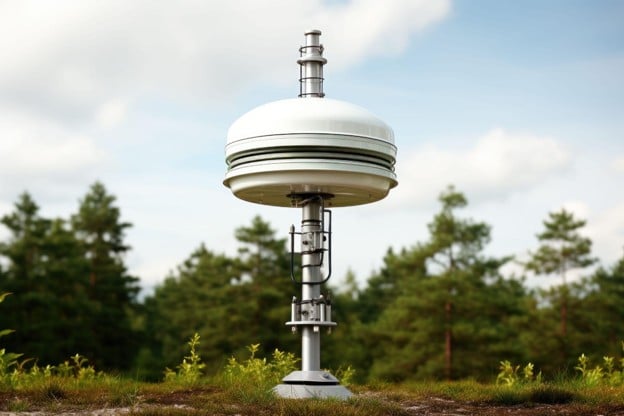
Why Choosing the Right GNSS Antenna Is Just as Important as Selecting the Receiver

Accurate positioning depends not only on the receiver but also on selecting the right GNSS antenna. The quality of satellite signals entering a positioning system directly influences accuracy, reliability, and overall performance across applications ranging from surveying and autonomous vehicles to precision agriculture and scientific research.
While GNSS receivers process satellite signals, the antenna serves as the system’s first point of contact. Even the most advanced receiver cannot compensate for poor signal quality if the antenna fails to capture clean, consistent satellite data.
Why GNSS Antenna Performance Shapes Positioning Accuracy
A GNSS positioning system performs best when both the receiver and GNSS antenna work together as a complete solution.
Professional GNSS antennas are designed to:
- Capture satellite signals with high precision.
- Reduce signal distortion.
- Improve satellite visibility.
- Support multiple GNSS constellations.
- Minimize positioning errors.
Rather than acting as a simple accessory, the antenna plays a critical role in determining how much useful information reaches the receiver for processing.
Signal Quality Begins at the Antenna
Every positioning solution depends on the quality of incoming satellite signals.
A high-performance antenna helps provide the following:
- Stable signal reception.
- Better signal-to-noise ratios.
- Reduced measurement uncertainty.
- Improved tracking consistency.
- Reliable positioning over long operating periods.
Capturing clean satellite signals from the beginning creates a stronger foundation for accurate positioning throughout the entire workflow, demonstrating the importance of selecting a high-quality GNSS antenna.
Multi-Constellation Support Improves Reliability
Modern GNSS technology extends well beyond traditional GPS.
Professional antennas are engineered to receive signals from multiple satellite constellations, including:
- Regional augmentation systems.
Tracking multiple constellations provides access to more satellites, allowing positioning systems to maintain reliable accuracy even when some signals become temporarily obstructed.
Antenna Design Helps Reduce Multipath Errors
One of the greatest challenges affecting GNSS accuracy is multipath interference.
Multipath occurs when satellite signals bounce off nearby surfaces before reaching the antenna, creating timing errors that reduce positioning precision.
Professional GNSS antennas are designed to minimize these effects through advanced engineering features such as:
- Ground plane optimization.
- Choke ring designs.
- Signal filtering.
- Improved radiation patterns.
Reducing multipath errors is especially important in urban environments, construction sites, and areas surrounded by reflective structures, where a properly engineered GNSS antenna can significantly improve positioning reliability.
Proper Antenna Placement Makes a Significant Difference
Even high-quality equipment can underperform if installed incorrectly.
Several installation considerations influence positioning performance:
- Clear visibility of the sky.
- Distance from radio frequency interference.
- Stable mounting surfaces.
- Proper cable management.
- Reduced obstruction from nearby equipment.
Small improvements in antenna placement often produce noticeable gains in positioning consistency.
Different Applications Require Different Antenna Designs
No single antenna configuration is ideal for every application.
Various industries have unique operational requirements.
Examples include:
- Surveying and mapping.
- Precision agriculture.
- Marine navigation.
- Machine control.
- Scientific research.
- Autonomous vehicles.
- Unmanned aerial systems.
Selecting a GNSS antenna specifically designed for the intended operating environment helps maximize long-term performance while supporting the unique demands of each application.
Frequency Support Influences Positioning Capability
Modern professional GNSS systems increasingly rely on multiple frequency bands to improve positioning accuracy.
High-quality antennas support signals across several frequencies, helping receivers:
- Resolve positioning faster.
- Improve RTK performance.
- Reduce atmospheric errors.
- Maintain stronger satellite tracking.
- Increase measurement consistency.
Multi-frequency capability has become increasingly valuable as additional satellite signals continue becoming available worldwide.
Environmental Durability Supports Reliable Operation
Professional GNSS equipment often operates under demanding conditions.
Antennas may be exposed to:
- Heavy rain.
- Extreme temperatures.
- Snow and ice.
- Continuous vibration.
- Long-term outdoor installations.
Reliable antenna construction helps maintain consistent signal reception despite changing environmental conditions. The durability of a GNSS antenna contributes directly to dependable positioning across extended deployments.
Compatibility Creates Greater System Flexibility
Professional organizations often integrate GNSS components from multiple manufacturers to meet specific project requirements.
Selecting antennas with broad compatibility provides benefits such as:
- Flexible receiver integration.
- Easier equipment upgrades.
- Simplified maintenance.
- Long-term scalability.
- Support for evolving positioning technologies.
This flexibility helps organizations protect existing investments while adapting to future operational needs.
Industry Standards Continue Supporting Best Practices
Accurate positioning depends not only on equipment quality but also on established industry standards and measurement practices.
Organizations such as the National Geodetic Survey (NGS) within NOAA continue supporting geospatial standards that improve consistency across surveying, mapping, and infrastructure projects. Following recognized best practices helps organizations maximize the performance of professional GNSS equipment.
Why the Right Antenna Completes the Positioning System
When evaluating GNSS equipment, receivers often receive the most attention. However, positioning accuracy depends on every component working together effectively.
A properly selected antenna helps improve:
- Signal quality.
- Positioning accuracy.
- Operational reliability.
- Long-term equipment performance.
- Return on technology investment.
Rather than viewing the antenna as a secondary component, organizations increasingly recognize it as a critical part of the overall positioning solution. Investing in a high-quality GNSS antenna allows professional GNSS receivers to perform at their full potential while supporting dependable results across demanding applications.
As industries continue relying on high-precision positioning for automation, infrastructure, research, and navigation, antenna performance will remain a fundamental part of overall system success. Choosing the right GNSS antenna helps create the reliable, accurate positioning foundation that modern operations require tomorrow.