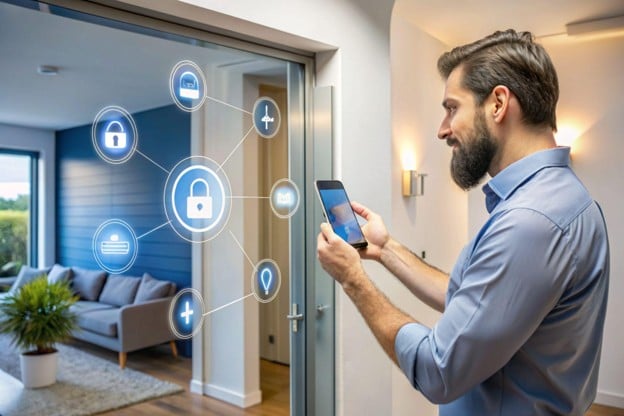
Beyond the Front Door: The Multi-Layer Security Approach Modern Apartment Residents Are Prioritizing

For many renters today, security door locks for apartments are becoming just one part of a much broader conversation about personal safety and access control. As apartment living continues to evolve, residents are increasingly adopting a multi-layer security mindset that focuses not only on preventing unauthorized entry but also on managing who has access, when they have access, and how that access is controlled over time.
Traditional apartment security often centered on a single lock protecting a single entry point. Today, however, modern residents are recognizing that effective protection involves multiple layers working together to create a more secure living environment.
Why Apartment Security Is No Longer Just About Stronger Locks
Many people assume that apartment security begins and ends with the front door. While high-quality security door locks for apartments remain a critical component, residents are increasingly realizing that security challenges extend beyond forced entry alone.
Apartment dwellers may encounter concerns involving:
- Former tenants who may still possess copies of keys
- Contractors or service providers requiring temporary access
- Shared living arrangements with roommates
- Frequent resident turnover within buildings
- Delivery access and package security
- Building-wide access control systems
These realities have encouraged a shift toward more comprehensive security planning.
Rather than relying solely on door strength, residents are increasingly evaluating how access is granted, monitored, and managed throughout the life of a tenancy.
The Growing Importance Of Key Control On Security Door Locks For Apartments
One of the most overlooked aspects of apartment security involves key duplication.
Many apartment residents never know how many copies of a key may exist or who may have had access before they moved in. Even when a lock appears secure, unrestricted key duplication can create vulnerabilities that remain largely invisible.
This is one reason that security door locks for apartments increasingly pair with advanced key control solutions.
Manufacturers such as Mul-T-Lock have helped elevate discussions around controlled key systems, which restrict and manage duplication through authorized channels. By limiting unauthorized copying, residents and property managers gain greater confidence regarding who can access a unit.
Often, security is not simply about stopping intruders. It is about reducing uncertainty.
Why Multi-Layer Security Creates Better Outcomes
Modern security strategies often resemble risk management frameworks rather than single-product solutions.
A layered approach may include:
- High-security locking systems
- Controlled key duplication policies
- Building access controls
- Video surveillance systems
- Smart monitoring technology
- Resident awareness practices
Each layer contributes to overall protection.
When combined, these measures help reduce reliance on any single point of failure. Security door locks for apartments remain important, but they function most effectively when integrated into a broader strategy.
This approach mirrors trends seen across commercial security environments, where layered defense systems have long been considered best practice.
How Apartment Turnover Influences Security Planning
Apartment communities experience significantly higher turnover rates than many other residential settings.
Every move-in and move-out introduces new security considerations.
Property owners and residents often face questions such as:
- Have all previous keys been returned?
- Were duplicate keys created?
- Has access been properly documented?
- Should locks be rekeyed or replaced?
These issues can become increasingly difficult to manage without structured key control systems.
Security door locks for apartments are often most effective when paired with rekeying strategies and controlled access procedures that account for resident turnover.
These conversations frequently discuss solutions offered by companies such as Mul-T-Lock, which help address both physical security and access management concerns.
Why Access Management Is Becoming a Residential Priority
Historically, access management was primarily associated with commercial buildings.
Today, many apartment residents are beginning to view access control through a similar lens.
Questions increasingly include:
- Who can enter the property?
- How is access granted?
- How quickly can access be changed if needed?
- How are lost keys handled?
- What protections exist against unauthorized duplication?
These considerations have transformed security door locks for apartments from simple hardware decisions into broader security planning decisions.
The strongest security systems often focus on controlling access before a problem occurs rather than responding afterward.
The Role of High-Security Locking Systems
Not all locks are designed with the same objectives.
High-security systems often incorporate features intended to resist common attack methods while also enhancing key management capabilities.
Residents evaluating security door locks for apartments frequently consider factors such as:
- Pick resistance
- Drill resistance
- Key control protections
- Durability
- Long-term reliability
Mul-T-Lock has become a recognized name within this space because its solutions often combine physical security with advanced key management features.
This combination reflects the broader evolution occurring throughout residential security planning.
Why Security Awareness Remains Essential
Even the strongest hardware performs best when paired with informed user behavior.
The Cybersecurity and Infrastructure Security Agency frequently emphasizes the value of layered risk management strategies and proactive security practices. While many of its recommendations focus on broader security environments, the underlying principle remains relevant to residential settings: effective protection depends on multiple safeguards working together.
Apartment residents can strengthen security by:
- Reporting lost keys promptly
- Verifying visitor access procedures
- Maintaining awareness of building entry points
- Reviewing access policies when moving into a new unit
- Working with property managers to address security concerns
Security door locks for apartments represent an important layer, but awareness and proper procedures help maximize their effectiveness.
The Future of Apartment Security
As apartment living continues evolving, security conversations are becoming increasingly sophisticated.
Residents are paying greater attention to:
- Access control systems
- Credential management
- Key duplication restrictions
- Resident turnover procedures
- Integrated security planning
This shift reflects a growing understanding that security is not a single product but a collection of interconnected protections.
The apartments that feel safest are often those where multiple layers work together seamlessly.
Conclusion
The conversation surrounding security door locks for apartments is evolving beyond traditional concerns about lock strength alone. Modern residents are increasingly embracing a multi-layer approach that combines physical security, key control, access management, and proactive planning.
As apartment communities become more dynamic and access challenges become more complex, solutions that address both security and control are gaining importance. Companies such as Mul-T-Lock continue contributing to this evolution by helping residents and property managers think beyond the front door and toward a more comprehensive view of residential protection.
Ultimately, the strongest apartment security strategies are those that recognize a simple reality: true security is rarely created by a single lock. It is built through layers that work together to reduce risk, manage access, and create greater peace of mind.